A Guest-Ready Home Is Not a Standard
A guest-ready home can mean one useful preparation, not an immaculate house: match the welcome to the visit, your household’s capacity and the time available.
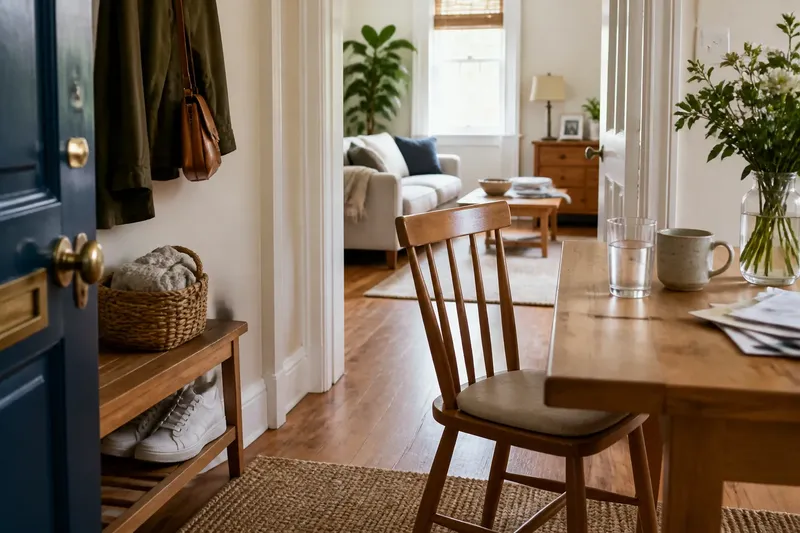
A guest-ready home needs preparation for the visit, not a reset of every room. For a guest-ready home, start with the person’s likely route and purpose: a clear chair for a short chat, or a made bed for an overnight stay.
Visits differ, and so do household time and energy. A parcel drop-off calls for little preparation, while supper may call for a clear place to sit and somewhere to put a bag. Choose what will make this particular visit more comfortable, and let unrelated chores wait.
What does this visit actually need?
Think about the entrance, the room where you will spend time, and any practical need the visit brings: a coat, a drink, a child’s buggy or a place to wash hands. This is not a tour of every room; it helps separate useful preparation from cleaning done to meet an imagined standard.
A repair worker may need a clear route to an appliance, not fresh cushions. A neighbour coming in for tea may need a clean mug and a reachable chair. A relative staying overnight may need clean bedding and a clear bedside surface. These are different kinds of welcome, not different grades of housekeeping.
Name the visit in a short phrase, such as “quick doorstep hello”, “tea at the table” or “overnight stay”. That phrase gives the preparation a boundary. If a task does not support the visit as you have described it, it can wait.
How can you choose one useful preparation?
Ask what would remove the most immediate friction for both guest and household. The best choice is often small and visible: clear a chair, put a glass of water on the table or move a bag away from the entrance. A tidy chair is like a clear patch on a kitchen worktop: it creates a usable place without requiring the whole room to be reset.
Say you have a friend coming for tea after work, and you have little energy left. You decide to clear the dining table of post, wash two cups and leave the rest of the sitting room alone. Your friend can sit down and have a drink; the unopened post remains a household task for another time. The expected result is a comfortable place to meet, not a house that looks untouched.
When the visit has several needs, put comfort and access first. A clear route may matter more than decorative tidying; clean bedding may matter more than arranging the living-room shelves. The aim is not to choose the smallest task at all costs, but to choose one that meaningfully serves the visit.
What can you do across the day?
A short plan can prevent a visit from becoming an open-ended cleaning session. Base it on the time you genuinely have. If the day is busy, one preparation can be enough; add another only if it serves a distinct need.
- When the visit is arranged: Confirm the practical detail that shapes the welcome, such as whether the guest is staying for a meal or needs somewhere to leave a coat. If no special need emerges, do not begin cleaning every room.
- Earlier in the day: Choose one task tied to the visit, such as clearing the table for a meal or making the guest bed for an overnight stay. If that task is complete, stop; if an essential need remains, choose only the next task that addresses it.
- Shortly before arrival: Check the entrance and the place where you will spend time. If there is an obvious obstacle, move it; if the route and seating are usable, bring out anything needed for the visit rather than restarting the preparation.
- After the visit: Return shared items to their usual places when convenient, and leave unrelated chores for the household’s normal routine. If an item is needed again soon, put it back; if not, let it wait until the household’s ordinary tidying time.
If several people share the home, agree on one clear request rather than issuing a general call to “make the place presentable”. One person might clear the table while another prepares drinks. A task with a clear endpoint is easier to accept than an undefined demand to tidy.
What if the household has very little capacity?
Capacity includes more than spare minutes. Illness, caring responsibilities, a demanding workday, mobility or the need to rest can all affect what is possible. Scale preparation to the need that cannot be met another way: for a brief chat, welcoming someone at the door may be enough; if they are bringing a meal, clearing somewhere to set it down may help more.
You can adjust the visit too. Suggest meeting at a café, keeping the visit brief or asking the guest to bring what would make the occasion easier. These are ordinary ways to share the work of hospitality, and they do not require an apology for every visible sign of daily life.
If a household member cannot take part, do not use their untouched space as the measure of readiness. Keep the visit within areas that make sense for everyone, and say plainly if a room is private or unavailable. A guest can be welcomed without access to every part of the home.
Which preparation fits common visits?
What should you prepare for a brief visit?
Focus on the entrance and the place where you will speak. Make a chair available or move an item that blocks the way; there is usually no reason to prepare rooms the guest will not use.
What matters most before serving food?
Make a usable place for the food and the people eating it. Clear enough table space for plates and drinks, and choose serving items that suit the meal rather than polishing the kitchen as a whole.
What should you do before an overnight guest arrives?
Prioritise the sleeping arrangement and the guest’s basic access to the bathroom. Fresh bedding, a place for personal belongings and a clear route through the rooms they will use matter more than a spotless front room.
What if the visit is unplanned?
Choose a welcome that fits the time available: open the door, offer a seat or suggest another moment if you cannot host just then. You can move one item from the seat or table, but an unexpected arrival does not require a whole-house reset.
How do you know when to stop?
Stop when the chosen preparation has made the visit possible or more comfortable. A clear chair is ready even if the shelf beside it holds books; a meal can be shared without every kitchen surface being empty. Treat that boundary as part of the plan, rather than adding “just one more” task until time runs out.
A guest-ready home is a decision about welcome, not a verdict on the household. For the next visit, keep the phrase tied to the actual person and occasion: one useful preparation, chosen with care, can leave room for both hospitality and ordinary life.